
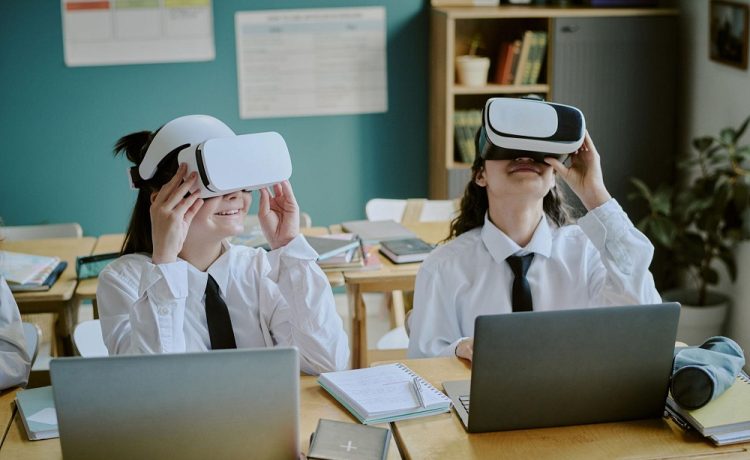
Virtual Reality (VR) has moved far beyond its early identity as a niche gaming accessory. Today, it represents a transformative platform shaping industries, redefining communication, and expanding how people learn, work, and connect. As hardware becomes more powerful and software ecosystems mature, VR is entering a new era—one defined by accessibility, realism, and meaningful real-world impact.
The future of VR applications lies not just in entertainment, but in solving complex challenges across healthcare, education, enterprise, and social interaction.
The Evolution of VR Technology
Modern VR systems benefit from rapid improvements in display resolution, motion tracking accuracy, and processing power. Standalone headsets have reduced the need for bulky external equipment, while advancements in hand tracking and haptic feedback are making virtual environments more natural and intuitive.
Emerging technologies shaping the next generation of VR include:
- Eye-tracking and foveated rendering to improve performance and visual clarity
- Wireless streaming for seamless experiences
- Haptic gloves and wearable feedback systems for tactile immersion
- AI-powered adaptive environments that respond dynamically to user behavior
These innovations are narrowing the gap between digital simulation and physical reality.
Healthcare: Transforming Treatment and Training
Healthcare is one of the most promising sectors for VR expansion. Medical professionals already use immersive simulations to practice complex procedures in risk-free environments. As realism improves, VR training modules will likely become standard in medical education.
Future applications include:
- Surgical rehearsal using patient-specific 3D models
- Pain management therapy for chronic conditions
- Mental health treatment through controlled exposure therapy
- Rehabilitation programs that gamify physical therapy exercises
VR’s ability to create safe, repeatable environments makes it uniquely valuable for both training and therapeutic intervention.
Education and Remote Learning
The classroom of tomorrow may not have walls. VR allows students to explore historical landmarks, conduct science experiments, and collaborate globally without leaving home.
Upcoming developments in education-focused VR include:
- Interactive virtual laboratories
- Historical recreations with immersive storytelling
- Language learning through simulated cultural environments
- Career training simulations for technical trades
By turning passive lessons into active experiences, VR enhances retention and engagement in ways traditional methods struggle to achieve.
Enterprise and Workplace Applications
Remote work accelerated demand for immersive collaboration tools. Future VR platforms are expected to evolve into fully interactive digital workplaces where teams meet, design, and problem-solve in shared 3D spaces.
Key enterprise use cases include:
- Virtual meetings with spatial audio
- Product prototyping in 3D environments
- Employee onboarding simulations
- Safety training for high-risk industries
As organizations seek cost-effective and scalable solutions, VR could reduce travel expenses while improving collaboration quality.
Social Interaction and the Metaverse
The concept of persistent digital worlds—often referred to as the metaverse—is pushing VR into mainstream cultural discussions. While still developing, social VR spaces are becoming more immersive and personalized.
Future trends may include:
- Realistic digital avatars powered by facial tracking
- Virtual concerts and large-scale social events
- Cross-platform interoperability between digital worlds
- User-owned virtual assets secured through blockchain technologies
The social dimension of VR could redefine community building and digital identity in profound ways.
Gaming: Beyond Entertainment
Gaming remains a central driver of VR innovation. However, future VR gaming experiences are likely to blur boundaries between storytelling, fitness, and social networking.
Expect to see:
- AI-driven narratives that adapt in real time
- Full-body tracking for more immersive gameplay
- Cross-reality integration blending AR and VR elements
- Cloud-based VR streaming for broader accessibility
As hardware costs decrease, gaming will continue to push creative and technological limits.
Industrial and Military Applications
High-risk industries benefit significantly from simulation technology. VR enables workers and personnel to train in controlled digital replicas of hazardous environments.
Future applications include:
- Emergency response simulations
- Engineering design validation
- Equipment operation training
- Tactical scenario planning
By reducing physical risk and material costs, VR offers practical, scalable solutions across sectors.
Challenges Shaping the Future
Despite rapid progress, several challenges must be addressed for widespread adoption:
- Hardware affordability
- Motion sickness and user comfort
- Data privacy concerns
- Content development costs
- Ethical considerations around digital immersion
Overcoming these barriers will require collaboration between developers, policymakers, and researchers.
The Role of Artificial Intelligence in VR
Artificial Intelligence will significantly amplify VR’s potential. AI can personalize virtual experiences, optimize performance rendering, and enable realistic digital characters that respond intelligently to users.
In the future, VR environments may evolve dynamically based on user preferences, emotional responses, and real-time behavioral analysis. This integration could make virtual experiences more intuitive, adaptive, and deeply engaging.
Long-Term Outlook
Over the next decade, VR may become as common as smartphones are today. As devices become lighter and more affordable, and as content ecosystems mature, immersive computing could become a standard interface for digital interaction.
The future of virtual reality applications extends far beyond entertainment. It promises to reshape learning, healthcare delivery, collaboration, and human connection—creating experiences that feel less like simulations and more like alternate realities.
Frequently Asked Questions (FAQ)
1. How soon will VR become mainstream for everyday users?
Adoption is accelerating, but widespread mainstream use depends on lower hardware costs, improved comfort, and compelling everyday applications beyond gaming.
2. Can VR replace traditional classrooms entirely?
While VR enhances engagement, it is more likely to supplement traditional education rather than fully replace physical classrooms in the near future.
3. Is VR safe for long-term use?
Short sessions are generally considered safe for most users. However, extended use may cause eye strain or motion discomfort, and ongoing research continues to evaluate long-term effects.
4. What industries will benefit most from VR in the next decade?
Healthcare, education, manufacturing, defense, and remote collaboration sectors are expected to see the strongest growth.
5. How does VR differ from augmented reality (AR)?
VR creates a fully immersive digital environment, while AR overlays digital elements onto the real world. Both technologies may converge in future mixed-reality systems.
6. Will VR require high-speed internet?
Advanced cloud-based VR experiences may require strong internet connectivity, but many standalone systems function without continuous high-speed connections.
7. What skills are needed to work in the VR industry?
Key skills include 3D design, software development (especially game engines), UX design, AI integration, and human-computer interaction research.