Among hardy perennials suited to British conditions, daylilies stand out for their resilience and remarkable range of colour. While fruit trees and apple orchards provide height and seasonal harvest, it is often bold herbaceous planting at ground level that completes a garden’s character. Statement daylilies, bred specifically for colour depth and presence, offer precisely that role.
Interest in Daylily plants for sale has grown steadily in recent years as breeders have developed cultivars with richer pigments, heavier substance and improved repeat flowering. These modern introductions are not the pale, fleeting blooms some gardeners remember from decades past. Instead, they are robust perennials capable of holding their own alongside shrubs, roses and even young fruit trees, creating a layered planting scheme that carries gardens confidently from early summer into autumn.
Specialist growers emphasise that colour depth is not achieved by pigment alone but by careful selection for plant health and performance. A leading British nursery dedicated to Daylily plants advises gardeners to prioritise strong root systems and proven cultivars. As noted by Swallowtail Daylilies, careful breeding and evaluation underpin the success of modern varieties, particularly those featured within their collection of Daylily plants. Plants are assessed not only for colour intensity but also for bud count, branching and reliability in UK conditions.
Their guidance highlights the importance of sourcing from reputable growers who trial plants over several seasons. Imported stock bred for hotter climates may not always express its full colour potential in cooler summers. By contrast, plants evaluated under British light levels and rainfall patterns are more likely to deliver the depth and presence gardeners expect.
The nursery further advises planting in full sun where possible, as adequate light encourages richer pigmentation. While some darker cultivars tolerate partial shade, insufficient sunlight can reduce bloom size and diminish colour clarity. Feeding with a balanced fertiliser in spring, followed by a lighter application after the first flush, supports repeat flowering without promoting excessive foliage at the expense of blooms.
This professional perspective reinforces a broader point: statement daylilies are an investment in long-term structure. When properly selected and sited, they form dependable clumps that improve year after year, increasing in scape number and visual authority.
Colour Depth in Modern Daylilies
Colour depth in daylilies refers not simply to brightness, but to saturation, tonal layering and the ability of a bloom to retain intensity in varied light conditions. British summers are unpredictable; strong sunlight one week can give way to overcast skies the next. Breeders have responded by selecting cultivars with thicker petals, heavier substance and pigments that resist fading.
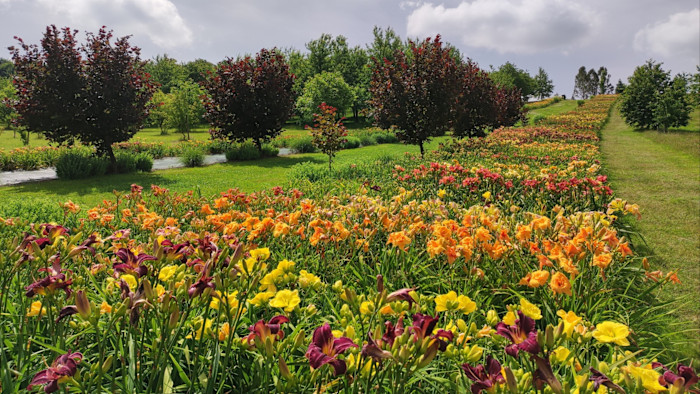
Deep reds now approach true crimson, with velvety finishes that appear almost lacquered in evening light. Purples have gained complexity, often featuring darker eye zones that draw attention to the flower’s centre. Near-blacks, while not botanically black, display such dense maroon pigmentation that they read as dramatic anchors within a border. Equally striking are saturated oranges and glowing golds that hold their tone even during high summer glare.
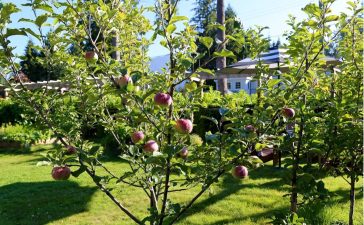
This emphasis on presence is important when integrating daylilies into mixed planting. In gardens where apple trees form a canopy layer, underplanting must be strong enough to compete visually with trunk, foliage and fruit. Statement daylilies achieve this through broad petals, ruffled edges and substantial scapes that lift blooms above surrounding foliage.
Professional growers note that modern breeding has also improved bud count and branching. A flower of intense colour is impressive, but a plant that carries multiple buds over several weeks becomes a structural element in its own right. When evaluating cultivars, gardeners should look beyond catalogue photographs and consider plant height, scape strength and foliage habit, all of which contribute to overall impact.
Ten Statement Varieties Selected for Impact
The following ten cultivars illustrate how far daylily breeding has advanced in colour depth and garden presence.
‘Black Stockings’ is renowned for its near-black petals and contrasting green throat. The bloom’s satin sheen gives it authority in contemporary planting schemes, particularly when paired with silver foliage or ornamental grasses.
‘Bela Lugosi’ produces a rich, royal purple flower with a lime-green throat. Its substantial petals resist fading and provide a bold focal point in midsummer borders.
‘Ruby Spider’ offers enormous blooms in deep ruby red, each petal marked by a pale midrib. The sheer size of the flowers gives it a commanding role in mixed beds.
‘Primal Scream’ is an intense, saturated orange with narrow, twisting petals. It injects energy into planting schemes and pairs effectively with blue or violet perennials.
‘Spacecoast Starburst’ combines magenta tones with a dramatic eye and ruffled edges, delivering both colour density and textural interest.
‘Chicago Apache’ remains a classic red, valued for its reliability and strong garden performance as well as its bold hue.
‘Blueberry Candy’ contrasts creamy petals with a saturated purple eye, demonstrating how tonal layering can create presence without relying solely on dark pigment.
‘Storm Shelter’ blends smoky lavender with a plum eye zone, offering depth suited to more restrained planting palettes.
‘Frans Hals’, a long-established bi-colour in red and golden orange, proves that clarity of contrast can be as impactful as sheer darkness.
‘Sammy Russell’, though smaller in bloom, produces such an abundance of deep red flowers that it forms a striking mass when planted in groups.
Each of these cultivars has been selected for more than novelty. They combine colour intensity with garden durability, ensuring that the visual impact suggested by promotional images translates into dependable performance in British soils.
Positioning Statement Daylilies in British Gardens
Statement daylilies are most effective when used deliberately. Rather than scattering single plants throughout a border, groupings of three or five create visual weight. In orchard settings or gardens with apple trees, they can be planted at the drip line where sunlight remains adequate but roots are not in direct competition with heavy feeder roots.
Soil preparation remains fundamental. Daylilies tolerate a range of conditions but perform best in well-drained, moderately fertile soil enriched with organic matter. Incorporating compost before planting supports strong root establishment, which in turn enhances scape strength and bloom size. Although drought tolerant once established, consistent moisture during bud formation helps maximise colour saturation and flower substance.
Garden designers often use darker daylilies as anchors, positioning them towards the middle or rear of a border where their depth prevents the scheme from appearing washed out. Brighter cultivars such as intense oranges and golds can be placed forward to catch light and draw the eye along a pathway.
For gardeners browsing Daylily plants for sale, it is worth considering flowering sequence. Early, mid and late-season cultivars can be combined to extend display over several months. Repeat-flowering varieties add further longevity, particularly valuable in smaller gardens where each plant must justify its space.
Under fruit trees, daylilies also serve a practical purpose. Their strappy foliage suppresses weeds and covers bare soil once spring bulbs have faded. This layered planting approach mirrors natural ecosystems, improving soil structure and moisture retention while enhancing aesthetic value.
Long-Term Care and Maintaining Visual Presence
Once established, daylilies are relatively low maintenance, but several practices ensure they retain their statement quality. Dividing clumps every four to five years prevents congestion and revitalises flowering. Overcrowded plants may produce smaller blooms with reduced colour intensity. Division also offers an opportunity to reposition sections for better balance within the border.
Deadheading spent flowers maintains a tidy appearance, particularly important for darker cultivars where fading petals can detract from overall impact. Removing finished scapes after the main flush directs energy back into the crown and encourages healthy foliage.
Mulching with organic matter in spring conserves moisture and moderates soil temperature. In regions prone to winter wet, good drainage is essential, as prolonged saturation can compromise root health. Raised beds or improved soil structure may be beneficial in heavy clay areas.
Companion planting further enhances colour depth. Pairing deep purple or near-black daylilies with pale grasses or silver-leaved perennials increases perceived contrast. Conversely, echoing tones through adjacent planting can create a cohesive, immersive effect. In orchard gardens, repeating the warm hues of ripening apples through red and gold daylilies establishes visual harmony between productive and ornamental elements.
For gardeners expanding established borders, revisiting reputable sources of Daylily plants for sale ensures consistency in quality and cultivar authenticity. Accurate labelling matters, particularly when planning colour schemes built around specific tonal relationships.
Conclusion: Lasting Impact Through Informed Selection
Statement daylilies bred for colour depth and presence represent a significant development in perennial gardening. Through careful breeding, growers have delivered cultivars that combine saturated pigmentation with robust garden performance. Whether used to anchor a mixed border, underplant apple trees or form a bold mass in a contemporary design, these plants provide reliable impact across varied British conditions.
The key to success lies in informed selection and thoughtful placement. Gardeners who consider height, flowering season and tonal balance will find that modern daylilies reward them with sustained presence rather than fleeting display. Supported by expert growers who trial and refine their collections, these perennials continue to evolve in both intensity and resilience.
In gardens where fruit trees supply structure and seasonal harvest, statement daylilies contribute depth at ground level, ensuring that colour and form remain compelling from early summer into autumn. With appropriate care and considered sourcing, they become enduring features that strengthen a garden’s identity year after year.